
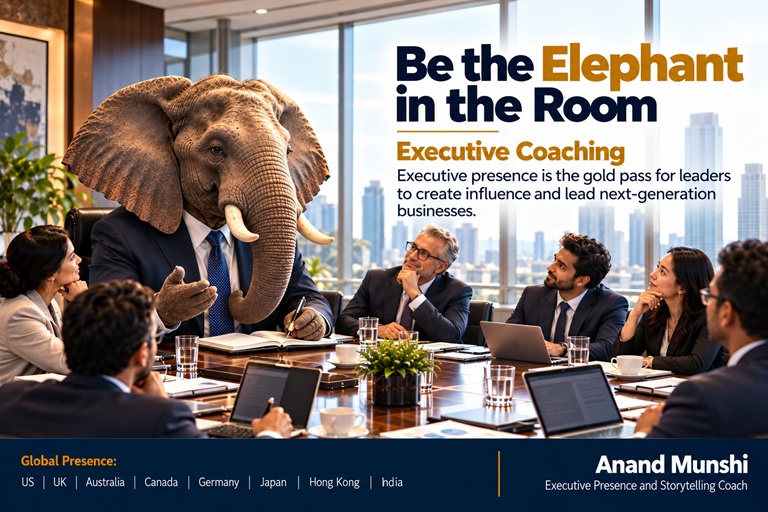
Eight Ways How Leaders Can Exhibit Executive Presence and Become Impossible to Ignore
Have you ever noticed that when certain leaders enter a room, people pay attention—even before they speak?
They don’t necessarily have the biggest designation, the loudest voice, or the most impressive résumé. Yet, when they speak, people listen. When they ask a question, people think. And when they leave, their ideas remain in the room.
That is executive presence.
For multinational leaders, executive presence is more than personal charisma. It is the ability to communicate credibility, inspire confidence, influence decisions, and shape organisational narratives. In an environment where technical expertise alone rarely guarantees influence, how you communicate your thinking can determine whether your ideas receive attention or disappear into the background.
Harvard Business Review identifies gravitas, communication skills, and appearance as traditional pillars of executive presence, while emphasising that expectations continue to evolve.
The objective isn’t to become the loudest person in the room. It is to become the person whose presence changes the quality of the conversation.
Here are eight ways to achieve that.
1. Speak with Clarity, Not Complexity
When Satya Nadella became Microsoft’s CEO in 2014, he championed a shift from a “know-it-all” to a “learn-it-all” culture. His message made a complex cultural transformation easier for employees to understand and practise.
The lesson: Complex thinking is valuable; unnecessarily complicated communication is not.
When you ramble, overuse jargon, or bury your message in slides, your audience must work harder to understand you.
Try this: Start meetings with your main point. Explain the business implication, support it with evidence, and finish with a clear recommendation. Make every sentence earn its place.
2. Develop Gravitas Under Pressure
In 2014, Mary Barra became CEO of General Motors during the company’s ignition-switch crisis. She publicly acknowledged the need for accountability and prioritised customer safety. GM subsequently undertook a comprehensive safety review.
The lesson: Gravitas becomes visible when circumstances become uncomfortable.
Defensiveness, blame, and emotional reactions can weaken confidence in a leader.
Try this: When challenged, pause before responding. Acknowledge the concern, separate facts from assumptions, and explain the next action. Your composure can help others think clearly.
3. Tell Stories That Make Your Vision Memorable
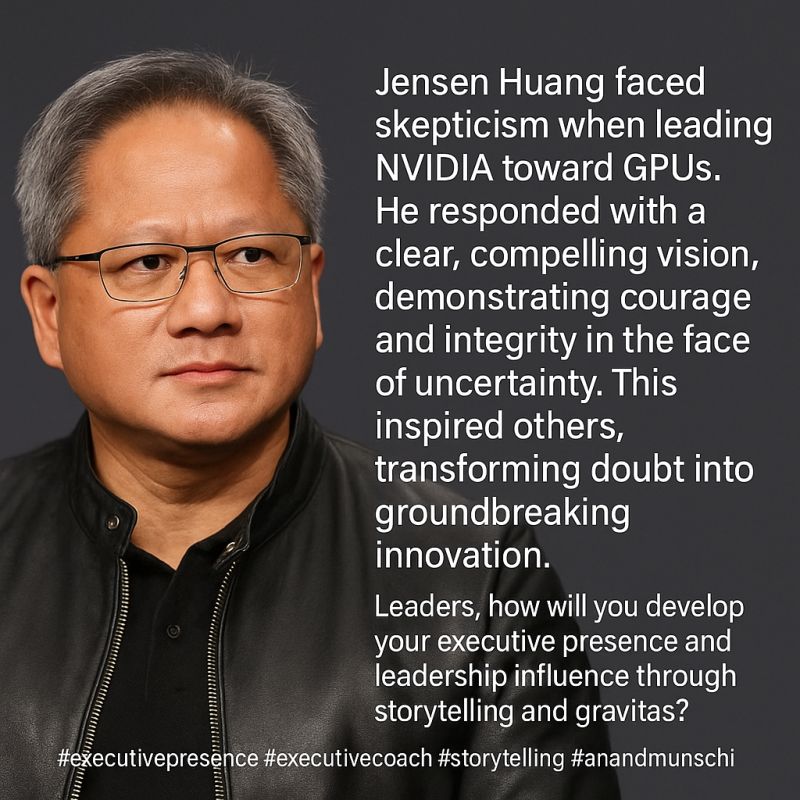
NVIDIA CEO Jensen Huang has discussed the importance of communicating company vision through storytelling, rather than relying solely on formal presentations.
The lesson: People may forget your slides, but a relevant story can make your message memorable.
Without stories, strategy can sound abstract and disconnected from everyday work.
Try this: When presenting a strategy, explain the problem through a real customer situation. Show what is at stake, what must change, and what success could look like.
4. Listen to Influence, Not Merely to Respond
Satya Nadella has emphasised customer empathy, curiosity, and learning as essential elements of Microsoft’s cultural transformation.
The lesson: Influence grows when people feel understood.
Interrupting, preparing your response while others speak, or dismissing unfamiliar perspectives can make even intelligent leaders appear insecure.
Try this: Ask one thoughtful follow-up question before offering your opinion. Summarise what you heard. Invite the perspective that challenges your assumptions.
5. Connect Your Ideas to a Larger Purpose
During her tenure as PepsiCo’s CEO, Indra Nooyi championed Performance with Purpose, linking business growth with nutrition, environmental responsibility, and broader stakeholder needs.
The lesson: A compelling leader connects business results to something larger than quarterly numbers.
Without that connection, communication can become transactional and fail to inspire commitment.
Try this: When proposing an initiative, explain three things: the business outcome, the people who benefit, and the long-term value it creates.
6. Make Your Body Language Support Your Message
Executive presence is communicated through more than words. Your posture, facial expressions, eye contact, and gestures influence how others experience your confidence and credibility.
The lesson: When your body language contradicts your words, people may question your message.
Fidgeting, avoiding eye contact, or appearing disengaged can weaken an otherwise strong presentation.
Try this: Stand tall, keep your shoulders relaxed, maintain natural eye contact, and use purposeful gestures. Record a short presentation and review it without sound. What does your body communicate?
7. Build Trust Through Consistency
Alan Mulally’s turnaround at Ford included stronger accountability, regular business reviews, and a more disciplined approach to confronting problems. Harvard Business School’s case study describes how these changes supported Ford’s transformation.
The lesson: Presence is not created in one impressive meeting. It develops through repeated behaviour.
When leaders make promises they don’t keep, change their position without explanation, or avoid accountability, their credibility erodes.
Try this: Make realistic commitments, communicate progress honestly, and acknowledge mistakes quickly. Let your actions reinforce your words.
8. Create Space for Others to Contribute
Nadella’s approach at Microsoft emphasised learning, inclusion, and collaboration rather than simply proving individual superiority.
The lesson: The strongest leaders don’t need to dominate every conversation to establish authority.
If every discussion revolves around you, talented colleagues may stop contributing. The result is less insight, weaker decisions, and reduced engagement.
Try this: Invite quieter voices into discussions, recognise contributions publicly, and give credit generously. Your influence grows when others become more effective around you.
Five Pro Tips to Strengthen Your Executive Presence
- Before a meeting: Identify the one message you want people to remember.
- During a presentation: Replace unnecessary words with pauses.
- When challenged: Respond with curiosity before defending your position.
- In everyday interactions: Make people feel heard and respected.
- After every important meeting: Ask yourself, “Did I add clarity, confidence, or confusion?”
The Elephant in the Room
Imagine two leaders presenting the same strategy to the board. One delivers 40 slides filled with data, jargon, and explanations. The other presents three insights, explains the business risk through a customer story, and recommends one clear decision. Both may be equally knowledgeable. But the second leader makes it easier for the board to understand, remember, and act. That is the difference executive presence can make.
You don’t become the elephant in the room by demanding attention. You become impossible to ignore by making your presence matter.