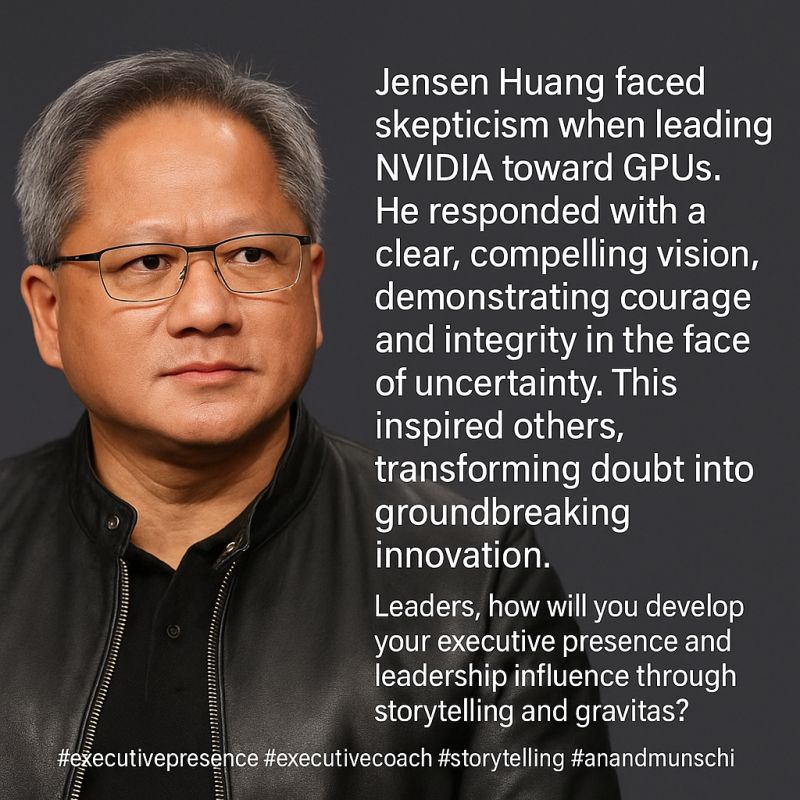


Great leaders are remembered not only for the decisions they make but for the way they communicate those decisions.
Every presentation is an opportunity to build trust, inspire teams, influence stakeholders, strengthen customer confidence, and reinforce the vision of the organization.
Whether presenting a business strategy, addressing employees during change, speaking with investors, or meeting customers, leaders are constantly shaping perceptions. A well-delivered presentation creates clarity, credibility, and commitment. A poor presentation creates confusion, doubt, and resistance.
Research from Harvard Business Review and leading consulting firms consistently highlights that stories and clear communication improve engagement, recall, and decision-making. Steve Jobs transformed Apple product launches into global events through storytelling and simplicity. Satya Nadella reshaped Microsoft’s culture by communicating a compelling vision built on empathy and learning. These examples remind us that presentation skills are leadership skills.
Below is a practical six-step framework that any leader can apply.
1. Understand Your Audience
What it means:
Identify who your audience is, what they care about, their concerns, expectations, and the action you want them to take.
What goes wrong if ignored:
Even excellent content fails when it is not relevant to the audience.
How to practice:
• Speak to the audience’s needs before your own agenda.
• Adjust examples and language for the listeners.
• Begin with the audience’s biggest challenge.
Expected result:
Higher engagement, stronger trust, and greater acceptance of your message.
Leadership example:
Indra Nooyi was known for tailoring her communication to employees, investors, and customers differently while maintaining one consistent vision.
One-line takeaway:
“People listen when they feel understood.”
2. Build a Compelling Story
What it means:
Organize the presentation into a clear beginning, middle, and end instead of presenting disconnected facts.
What goes wrong if ignored:
The audience remembers isolated points but misses the central message.
How to practice:
Start with the current situation, explain the challenge, present the solution, and conclude with a call to action.
Expected result:
Better retention, emotional connection, and stronger influence.
Leadership example:
Steve Jobs introduced products through stories that focused on solving customer problems rather than listing specifications.
One-line takeaway:
“Facts inform. Stories inspire.”
3. Design Visuals That Support the Message
What it means:
Slides should simplify your message rather than become your script.
What goes wrong if ignored:
Cluttered slides distract the audience and reduce credibility.
How to practice:
Limit text, use meaningful visuals, highlight one key message per slide, and maintain consistency.
Expected result:
Improved clarity and audience attention.
Leadership example:
Apple presentations became benchmarks for simple, elegant visual communication.
One-line takeaway:
“Your slides should support your voice, not replace it.”
4. Deliver with Executive Presence
What it means:
Use voice, pauses, eye contact, gestures, and confident body language to reinforce your message.
What goes wrong if ignored:
Great ideas lose their impact when delivered without confidence or energy.
How to practice:
Rehearse aloud, record yourself, seek coaching, and focus on conversational delivery.
Expected result:
Higher credibility and stronger audience confidence.
Leadership example:
Barack Obama combines pauses, storytelling, and calm confidence to create memorable speeches.
One-line takeaway:
“Confidence is communicated before content.”
5. Learn Through Feedback
What it means:
Every presentation is an opportunity to improve.
What goes wrong if ignored:
Communication weaknesses become long-term habits.
How to practice:
Request honest feedback, review recordings, and refine one improvement area after every presentation.
Expected result:
Continuous improvement and increasing executive presence.
Leadership example:
Many TED speakers rehearse repeatedly with coaches and peer feedback before stepping on stage.
One-line takeaway:
“Feedback is the fastest path to mastery.”
6. Finish with Action
What it means:
End every presentation with a clear summary and next steps.
What goes wrong if ignored:
People leave inspired but uncertain about what to do next.
How to practice:
Summarize three key takeaways, define responsibilities, and follow up with supporting material.
Expected result:
Better execution and measurable outcomes.
Leadership example:
Amazon’s leadership meetings conclude with clear ownership and actions, ensuring communication translates into execution.
One-line takeaway:
“A presentation succeeds only when action follows.”
Conclusion
Impactful presentations are not about impressive slides or perfect language. They are about helping people understand, believe, and act. Leaders who master presentation skills build trust, align teams, influence stakeholders, strengthen customer relationships, and communicate a compelling vision.
As Maya Angelou said, “People will forget what you said, but they will never forget how you made them feel.”
Another timeless reminder from Peter Drucker:
“The most important thing in communication is hearing what isn’t said.”
#AnandMunshi, #ExecutivePresence, #Storytelling, #Leadership, #PublicSpeaking