

“Leadership is not just what you say—it is what people experience in your presence.”
Across boardrooms, global leadership forums, and top corporate corridors, one theme keeps resurfacing: Executive Presence. It is the x-factor, the force that makes people sit up when you enter a room, pay attention when you speak, and trust your decisions even before they see the results.
Harvard’s research calls Executive Presence “leadership currency”—the differentiator that determines who gets noticed, promoted, and trusted with the most critical responsibilities. In a global survey of senior leaders, over 72% said that executive presence is essential for leadership success, yet only 38% felt they had developed it.
Executive Presence is not about charisma. It is not about title, power, or confidence alone. It is the ability to project clarity, credibility, composure, and connection in every interaction. It is felt before it is understood.
Below are 10 powerful ways CEOs and senior leaders can build world-class Executive Presence—each with significance, implementation guidance, consequences of ignoring it, and real examples.
1. Master the Art of Clarity
What it means
Leaders with EP communicate with calm precision—no jargon, no noise, only what matters.
How to implement
- Start with the “one big message” rule
- Remove unnecessary data in presentations
- Repeat key points three times for retention
If ignored
Teams operate in confusion. Misalignment grows. Decisions slow down.
Real example
Satya Nadella simplified Microsoft’s growth story into one sentence: “Empower every person and organization to achieve more.” That clarity repositioned a trillion-dollar company.
2. Speak Less, Say More
What it means
Presence is built not by dominating air-time but by using words intentionally.
How to implement
- Pause before responding
- Use structured thinking (what → why → impact)
- Keep answers under 60 seconds unless asked otherwise
If ignored
Long-winded leaders dilute impact and appear under-prepared.
Real example
Great CEOs like Tim Cook are known for concise yet powerful boardroom communication rooted in clarity and calm.
3. Command the Non-Verbal
What it means
90% of executive presence is felt, not spoken.
How to implement
- Maintain steady eye contact
- Keep open posture
- Enter rooms with controlled pace
If ignored
Leaders appear unsure, aggressive, or disconnected—often unintentionally.
Real example
Former PepsiCo CEO Indra Nooyi used strong posture and warm facial expressions to create authority blended with empathy.
4. Demonstrate Decisiveness Under Pressure
What it means
Executive presence amplifies when a leader makes decisions with clarity—even in chaos.
How to implement
- Use “decide, communicate, align” model
- Reduce decision fatigue through frameworks
- Make time-bound choices
If ignored
Teams lose confidence. Opportunities slip. Competitors win.
Real example
During 2008 crisis, Ford’s Alan Mulally made bold cost and restructuring decisions early—saving the company without government bailout.
5. Exhibit Emotional Intelligence
What it means
EP is impossible without self-awareness and empathy.
How to implement
- Regularly check tone and emotional signals
- Listen for what is not said
- Respond, don’t react
If ignored
Toxicity escalates. Star performers disengage. Trust erodes.
Real example
Leaders like Satya Nadella transformed culture primarily through empathy-driven leadership.
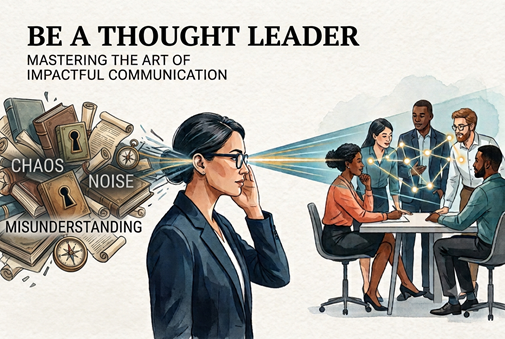
6. Build Thought Leadership
What it means
Leaders with presence shape conversations—not follow them.
How to implement
- Publish insights
- Share frameworks, not opinions
- Lead conversations around the future
If ignored
Leaders become operational managers—not strategic influencers.
Real example
Sheryl Sandberg’s “Lean In” movement became a global leadership narrative, extending her influence far beyond Facebook.
7. Use Storytelling to Influence
What it means
Facts inform; stories influence. Senior leaders win hearts before minds.
How to implement
- Use real incidents to explain strategy
- Convert data into relatable human impact
- Structure stories with conflict → action → result
If ignored
Stakeholders don’t emotionally connect; alignment weakens.
Real example
Steve Jobs’ storytelling turned product launches into cultural events.
8. Build Credibility Through Consistency
What it means
Trust in leadership grows when words and actions remain aligned.
How to implement
- Deliver on small promises quickly
- Keep communication predictable
- Avoid last-minute directional shifts
If ignored
Teams become skeptical and disengaged.
Real example
Toyota built decades of trust through culture of consistency and reliability.
9. Develop a Strong Personal Brand
What it means
Your brand is not what you say about yourself—it is what the room feels when you walk in.
How to implement
- Be known for 1–2 distinctive strengths
- Curate your digital presence
- Strengthen your leadership narrative
If ignored
Leaders blend into the crowd, losing influence and visibility.
Real example
Richard Branson’s personal brand became a multi-billion-dollar differentiator for every Virgin business.
10. Lead With Future-Focused Optimism
What it means
Presence is strengthened when leaders think beyond the crisis, into possibility.
How to implement
- Use “possibility language”
- Create long-term narratives
- Expect ambiguity and prepare for it
If ignored
Teams remain stuck in firefighting mode, lacking hope and direction.
Real example
Jeff Bezos led Amazon with a simple mindset: “Focus on the things that don’t change”—customer obsession and innovation.
Conclusion: Executive Presence Is Earned, Not Declared
Executive Presence is not a personality trait. It is a deliberate leadership practice—a combination of clarity, composure, credibility, connection, and conviction.
Great thinkers have always echoed this:
- “People don’t remember your words; they remember your energy.”
- “Leadership is the transfer of belief.”
- “Presence is power—silent, steady, undeniable.”
In today’s fast, complex, AI-driven world, leaders must learn to project who they truly are—clearly, confidently, and consistently.
Executive Presence Coaching helps leaders:
- Build a distinct leadership narrative
- Communicate with depth and influence
- Strengthen their emotional and strategic intelligence
- Become the leaders people trust, follow, and remember
As India’s leading Executive Presence Coach, Anand Munshi helps senior leaders elevate their leadership presence with proven frameworks, storytelling mastery, and boardroom communication strategies.