
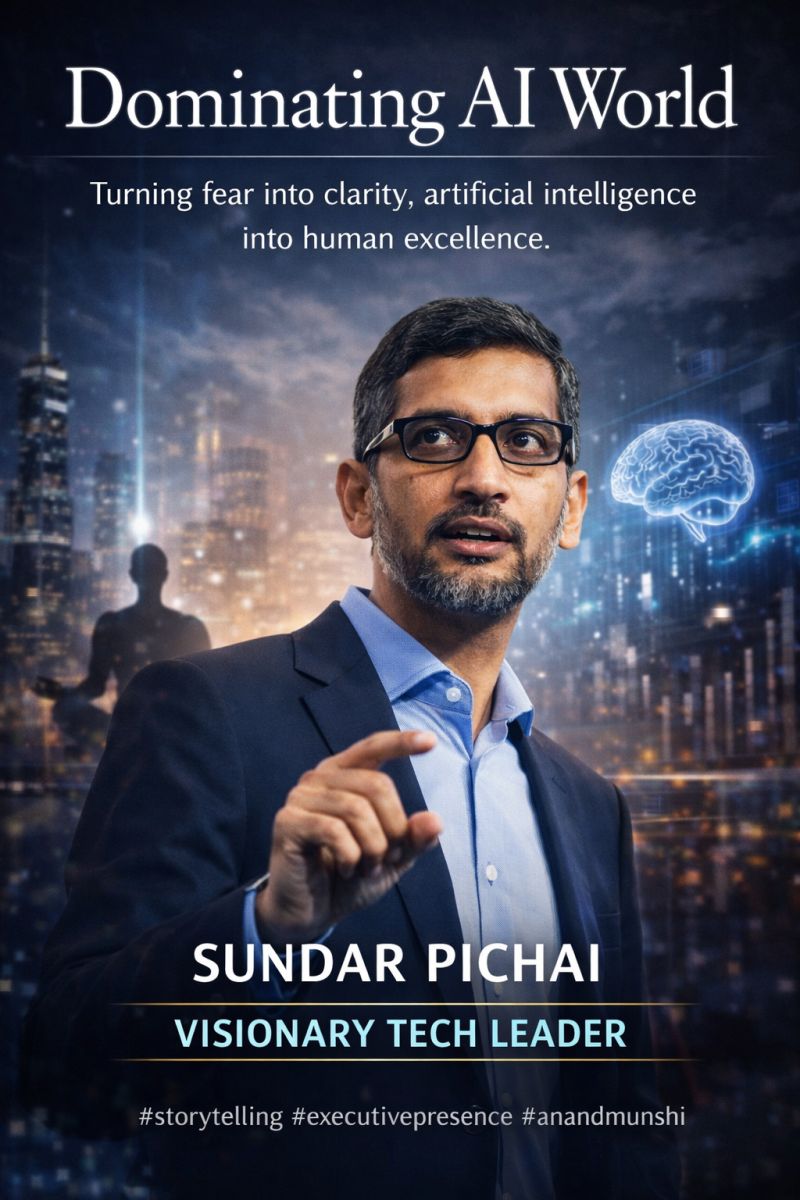
It may come as a surprise to many that before leading the world’s most powerful AI conversations, Sundar Pichai was quietly questioning his own relevance.
Inside Google, the pressure was relentless. AI competition exploded overnight. OpenAI changed the rules. Markets panicked. Employees worried. Leaders doubted. One wrong move could cost billions, credibility, and the future.
Then came the darkest stretch. Headlines questioned leadership. Share prices shook. Engineers felt exhausted. Trust was fragile. Pichai carried it all—responsibility for innovation, people, ethics, and speed.
The biggest challenge was not technology; it was fear. Fear of losing trust. Fear of reacting instead of leading. Fear of letting urgency kill values. Everything was at stake—jobs, innovation, and the soul of the organization.
What kept him steady was something few noticed: calm clarity. While noise grew louder, he slowed down. He listened. He chose long-term purpose over short-term applause.
He anchored AI around responsibility, not panic.
When pressure peaked, he acted decisively. He reorganized teams.
Refocused on core AI capability. Spoke openly to employees. Took ownership publicly. Critics mocked. Comparisons followed. But he stayed grounded.
Then the shift happened. Products stabilized. Confidence returned. Innovation accelerated. Trust rebuilt.
Leadership lesson? In an AI-driven world, calm thinking beats loud reacting.
So ask yourself—when disruption hits, will you rush… or will you rise?
hashtag#storytelling hashtag#executivepresence hashtag#leadershipcoach hashtag#anandmunshi